
Where the Day Began - Inside the Machine
Before any café, before any canal, the day started somewhere unexpected: inside a university lab at NHL Stenden, one of Leeuwarden’s applied sciences institutions. The AI centre there isn’t a showroom for corporate tech demos – it’s a working, experimental space where students and researchers are actively playing with the edges of what artificial intelligence can do.
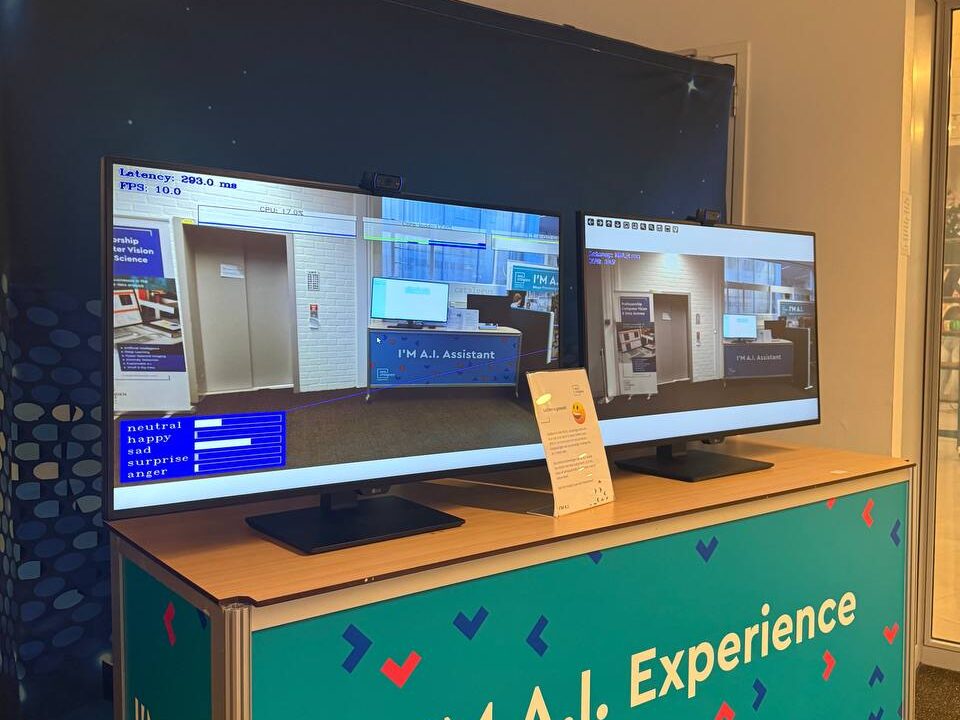
One of the first things that caught our eyes was a kiosk boldly labelled “I’M A.I. Experience” — a setup running computer vision software. Two monitors showed a live camera feed on the left and a processed output on the right. On screen, emotion labels flickered in real time: neutral, happy, sad, surprise, anger — each one with a confidence bar updating live as people walked past.
“Watching the machine read human faces felt both fascinating and quietly unsettling — the camera doesn’t pause, doesn’t judge, doesn’t forget.”
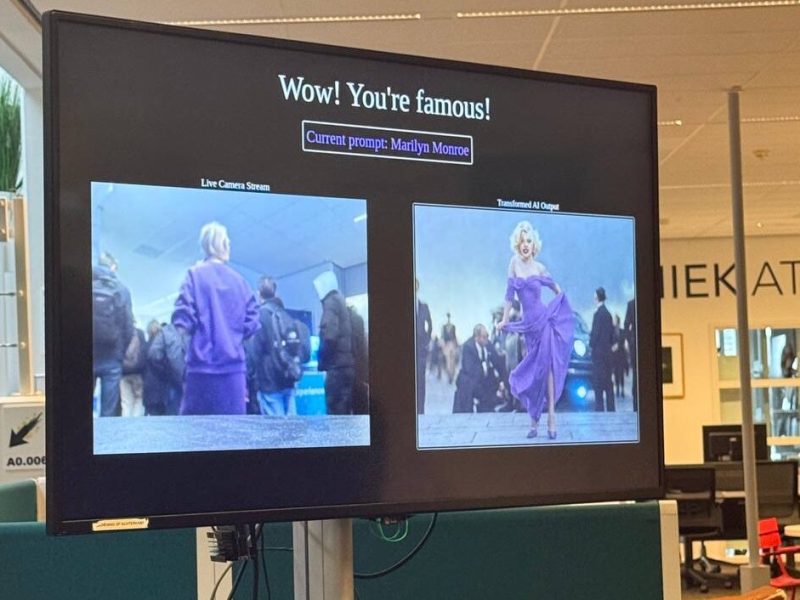
Further along was a demo that took things in a more playful direction. A screen read “Wow! You’re famous!”, with a live camera stream on the left and a transformed output on the right — the current prompt was set to “Marilyn Monroe.” The system was generating in near real-time a version of whoever stood in front of the camera, restyled as a Hollywood icon. Theatrical, a little absurd, and an effective way to make AI feel tangible rather than abstract.
Together, the two demos posed quiet questions worth sitting with: What does a machine learn when it watches us? And what does it mean to transform a face — even playfully?
A Wall That Speaks - The Mural of Leeuwarden
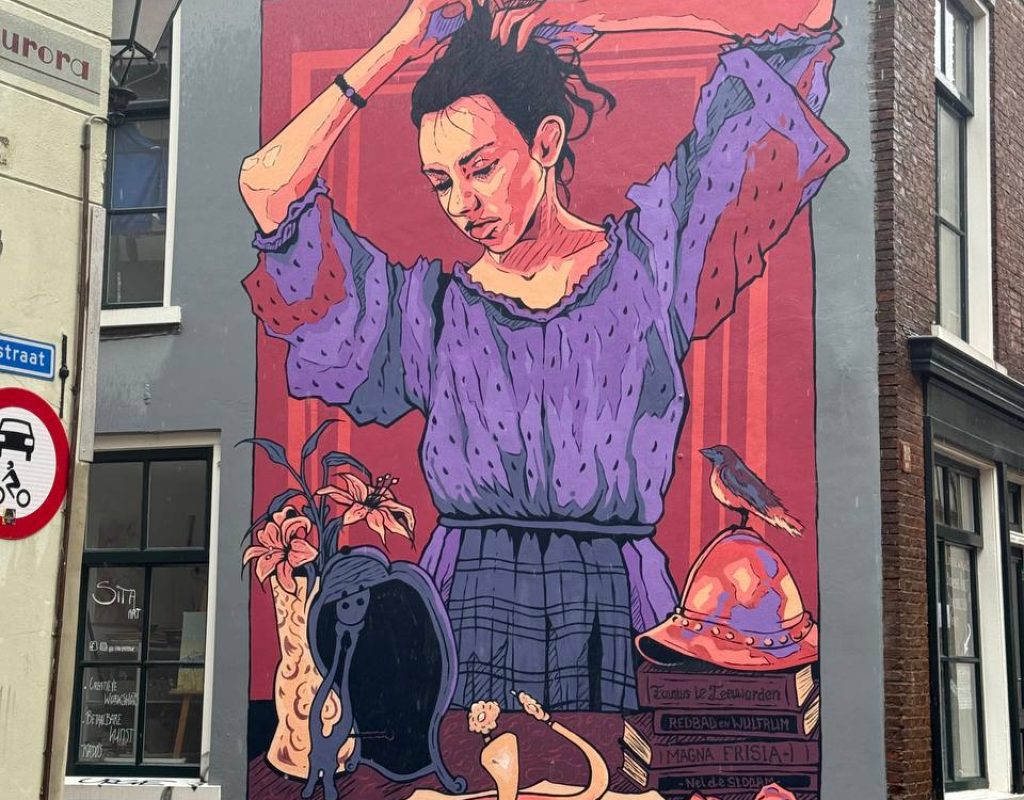
Walking into the city centre, one of the first things to stop you in your tracks is a monumental mural on a building corner — the kind that earns its scale. Painted in 2025 by Sjoerd Jansen under the name @studio.anti.held, the work fills an entire building wall with deep purples, corals, and muted greys.
A woman stands at the centre, arms raised as she fixes her hair, dressed in a flowing violet top. She is surrounded by symbolic objects: a stack of books bearing names like Redbad, Magna Frisia, and references to Leeuwarden itself; a small black cat; lilies; a bird; and a Viking-style helmet. These aren’t random props — they’re nods to Frisian history and identity, woven into a portrait of quiet, everyday strength.
“The books at her feet told the story of a region — Magna Frisia, Redbad, Leeuwarden. Street art as local history lesson.”
The mural sits naturally in the city’s streetscape: a traffic sign to the left, a lamp post in front, a narrow alley to the right. It doesn’t demand a white gallery wall to be meaningful. It belongs here, in the rain-damp air of a Dutch city morning.
A Wall That Speaks - The Mural of Leeuwarden
Inside the Fries Museum, the mood shifts completely. Where the street mural was bold and outdoor-scaled, the museum works quietly, layering time.
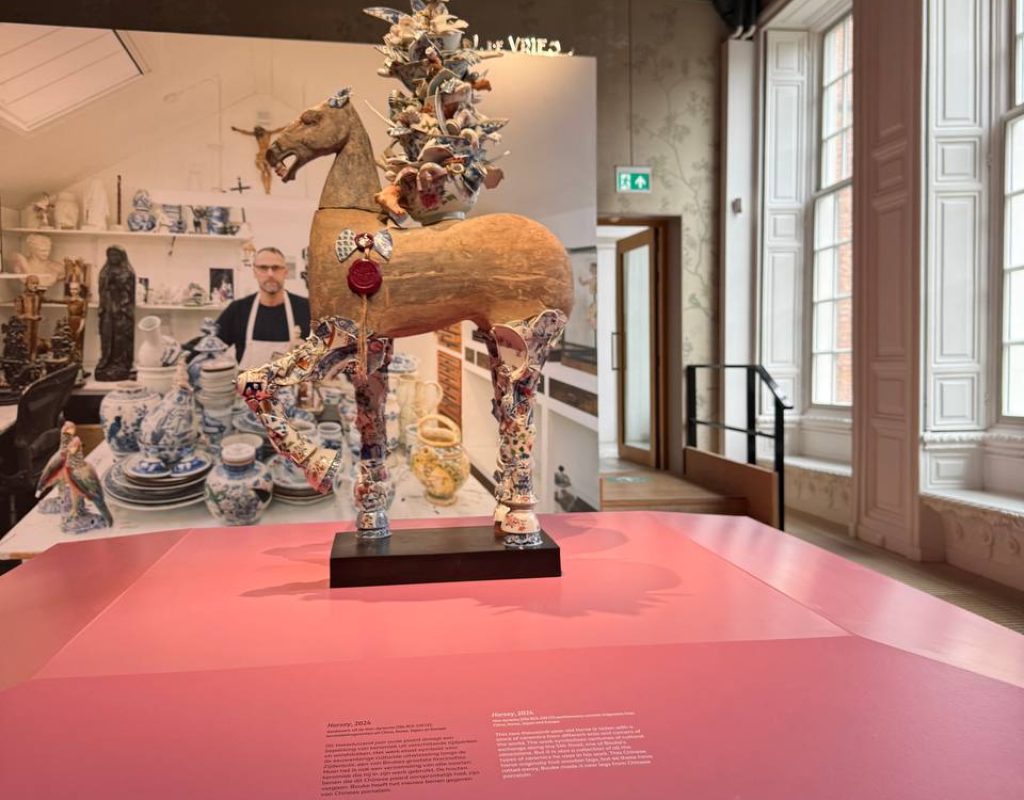
In the main hall, a sculpture called Horsey (2024) commanded its own pink platform. The work is a horse figure that merges two distant traditions: the rough, terracotta-like form of a Tang dynasty horse with legs and decorative elements made entirely of Delftware porcelain – the classic blue-and-white Dutch ceramic tradition. It’s a piece about cultural mixing, about what happens when East meets West – not through conflict, but through the patient hands of a maker.